
Dr Google Has a New Friend: Meet AI (But Don’t Fire Your Pharmacist Yet)
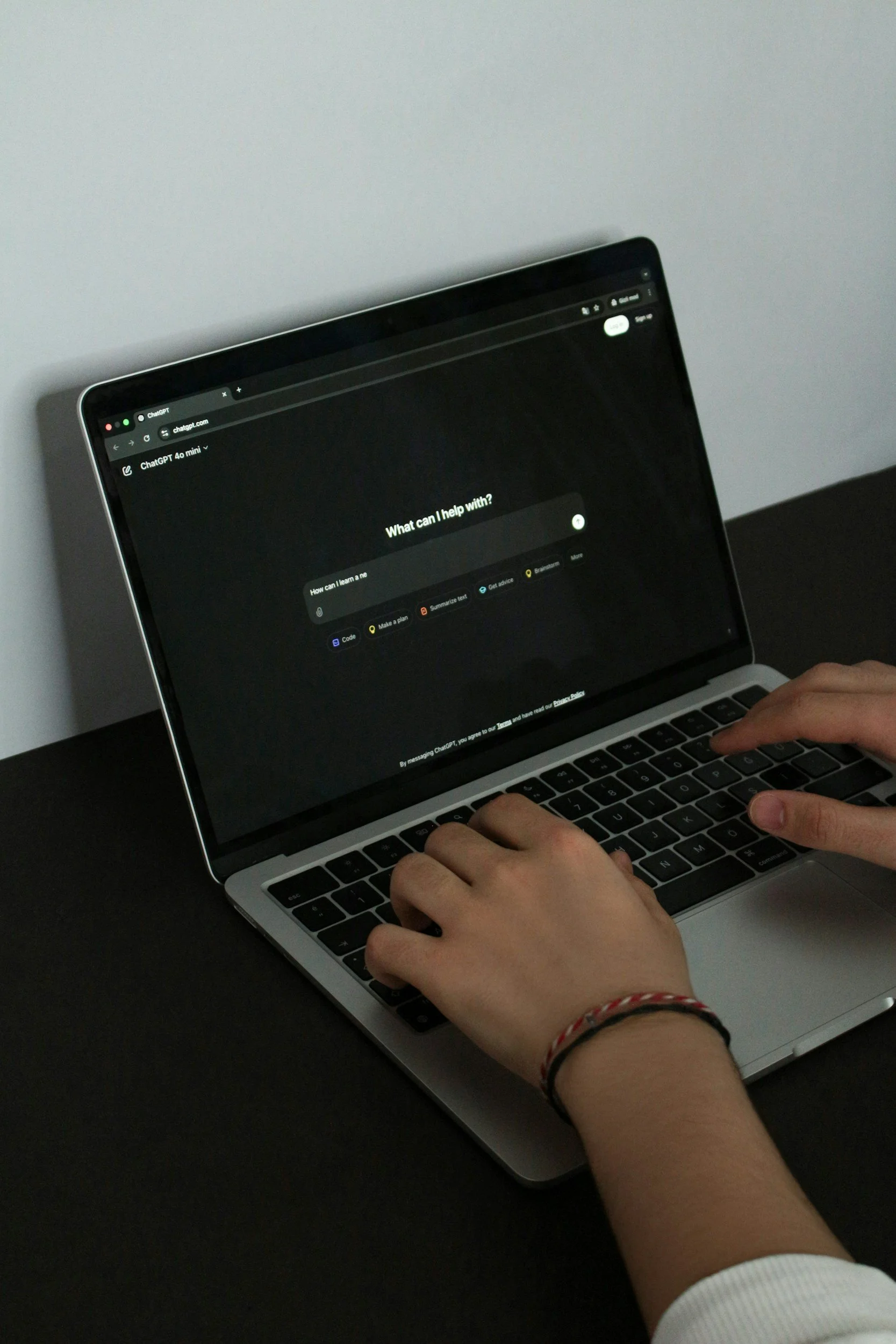
A lot of people now use AI tools to ask health questions before speaking to a doctor or pharmacist. It is easy to understand why. AI is designed to be quick, accessible and good at explaining complex topics in simple language.
For many people it has become the new ‘Dr Google’.
The problem is that healthcare is not only about finding information. It is about understanding whether that information applies to the individual person.
There are many patient-specific factors that can influence what information applies to who.
For example:
medical history
current medicines
allergies
age
risk factors
location
This is where clinical judgement from a human clinician (such as a doctor, nurse, pharmacist or dentist) remains essential.
We see the impact of AI health information every day.
I saw a good example of this recently in the travel clinic:
A patient was travelling to a destination where typhoid vaccination was recommended, so I checked the relevant UK travel health guidance through NaTHNaC, which is one of the main resources used by travel health professionals in the UK.
For oral typhoid vaccination, the UK schedule is three capsules, with one taken every other day.
Out of curiosity, I asked an AI tool the same question.
It confidently told me the course required four capsules.
This immediately stood out, because the oral typhoid vaccine used in the UK is supplied in a pack of three capsules. So four capsules did not fit with the product or the UK schedule.
When I asked the AI whether it meant three capsules instead of four, it corrected itself.
It’s a small example, but an important one. AI can provide useful information, but it can also give incorrect answers in a confident and convincing way. Unless someone has the right background knowledge, it is not always obvious when something is wrong.
Healthcare guidance can also vary wildly between countries.
A medicine that is available over the counter in one country may require a prescription in the UK. Vaccine schedules, treatment guidelines and prescribing decisions can differ depending on national guidance, research and local practice.
A lot of the time, guidance exists in the way it does because of the resources available in that location. For example, the Gardasil 9 HPV vaccine is recommended as a one-dose course in some countries where access to healthcare is sparse. The manufacturer recommends 3 doses, and the NHS recommends 2-3 doses.
This does not mean AI has no place in healthcare information.
It can be a useful tool for learning, understanding terminology and preparing questions for a consultation.
But it should not be used as a replacement for professional advice, especially when decisions involve medicines, vaccines, symptoms, side effects or treatment.
Good healthcare depends on more than information. It depends on interpretation, context and clinical judgement.
As a pharmacist and prescriber, I am in favour of patients having increased accessibility to information: it’s good that people can access healthcare information through tools like AI - but take that information with a pinch of salt. AI can’t see you, your symptoms, your history or your concerns.
Remember that it’s OK to ask your pharmacist - we can clarify the information AI gives you.

This article was written by Stelios.
Stelios Michailidis
Clinical Pharmacist & Independent Prescriber
GPhC 2221654
